POST by HOWARD MAROSI - Friends of Public Housing Victoria
Howard is a Union delegate and skilled negotiator with a broad interest in politics. With the late Doug Jordan, Howard arranged a meeting with Trades Hall Council which subsequently passed a resolution to oppose any further transfers of public housing stock to 'social' and 'community' housing companies.
WAYS TO MAKE HOUSING ECONOMIC FOR THE PEOPLE, NOT THE INVESTORS.
DEFEND AND EXTEND PUBLIC HOUSING
1. Public housing can be for everyone that wants it. Just like public education and public health. Opening up public housing to all will stop the ghettos, and will raise more funds, as wealthier people will also rent.
2. Not for profit rents in Public Housing. (Public tenants pay a fixed rate of 25% of their income).
As wealthier people enter public housing, rents can be lowered for the poorer tenants. An absolute maximum amount of rent for public housing can be introduced, to make it worthwhile for those on higher incomes- for example, $200 per week per wage earner.
3. Stop and reverse the gift of public housing from Government to the 'Affordable Housing' Sector, known as “Housing Associations” or “Community Housing”- against the wishes of public tenants. In reality, these are private organizations, which do not have to obey public housing rental limits, or provide security of tenure.
4. It is not necessary to have “mixed developments”, like that in Carlton, where some public housing units were demolished, then replaced by mainly private homes and some public housing units.
5. Existing housing can be acquired for the Public Housing sector
6. Public land should be reserved for public housing needs, and only sold privately when those needs are met.
GOVERNMENT REGULATION OF PRIVATE RENTAL PROPERTY
7. Rent control- limit rent rises to rate of rises in wages/pension.
8. Security of tenure for private tenants. Landlords must have a legitimate reason to evict tenants. That does not include renovating a property to get a higher rent.
REGULATION OF HOME OWNERSHIP
9. Home ownership for all who want it. To be achieved by Government regulation of financing and ownership.
10. Government to limit the number of homes one person can own. Exemptions if necessary for the purpose and period of construction of new homes.
11. The total number of rental properties to be limited to the number of people who would rather rent than own. (People who own rental properties are depriving other people who want to own their own home. And bidding up the price ).
12. Government to encourage lifetime ownership of housing over freehold ownership, with the ownership to revert back to Government upon death of owner. (for example, by cheaper loans for this than for outright ownership).
13. Government then to sell or rent the properties it regains, as per needs and preferences of the population.
GOVERNMENT FINANCE AND TAXATION OF HOME OWNERSHIP
14. Abolish negative gearing for investors.
15. Establish a Government bank to finance home ownership, with deposits fully guaranteed.
16. Government Bank to attract funds from public by Government ceasing to guarantee deposits, or reducing the level of guarantee of deposits, in private banks.
17. Government to limit private banks` home mortgage interest rates to the rate of wage/pension rise.
18. Big taxes on inheritances of investment property. Some tax on inherited owner-occupied property, too.
19. Taxation of income from rental property to be at a higher rate than tax on wages.
20. Moratorium on mortgage repayment for those who become unable to pay through loss of job, illness etc.
21. Eliminate stamp duty for owner-occupiers.
22. The first-home owners grants would be unnecessary if these other measures are adopted, and can thus be removed, saving Government funds.
Tuesday, 12 May 2015

Thursday, 30 April 2015
1000 PUBLIC TENANTS DISPLACED
ONE
THOUSAND TENANTS PERMANENTLY DISPLACED FOLLOWING PUBLIC HOUSING
REDEVELOPMENT
The
book 'Mixed
Communities: Gentrification by Stealth?'
includes a discussion of the redevelopment of the Kensington public
housing estate in Victoria as part of its global analysis on the
subject.
At
the time of the redevelopments, there was a strong working class
community in Kensington (early 2000's). Public housing communities
then made up 30% of Kensington's population and contributed greatly
to the cultural diversity of the area, including residents from
Italy, Malta, South America, China, Vietnam, Horn of Africa, former
Yugoslavia, Turkey and Greece. A large proportion of children in
Kensington were from the public housing estate. By all accounts the
community in Kensington was thriving with plenty of positive
interaction between public tenants and their neighbours. ( Hulse et
al 2004 )
The
government decided to redevelop the estate which commenced in 2002
and was completed in 2012. It became known as the 'Kensington model'
and was a Private/Public Partnership ( PPP ). It was touted as 'a
test bed for future inner city housing management' (DHS, 2002).
The
project involved a mass relocation of public tenants while the public
housing properties were being demolished and new properties built -
but what is not widely known is that around one
thousand of the
relocated public tenants from the Kensington estate never returned.
They were permanently
displaced. This
information is 'not available through relevant government
departments'. Eventually however the Office of Housing disclosed that
only 20% of relocated tenants 'chose to return after settling in
their new area'. As the book states - how much choice the tenants
really had is contestable.
'Mixed
Communities : Gentrification by Stealth?' p138
Other
public housing estates to follow ... ?
The
redevelopment of the Carlton estate in 2008 had the following
projected outcome. 'In evidence to a planning panel hearing for the
redevelopment of the Carlton estate, DHS estimated that only 20
percent of the original residents would return on completion
(Government of Victoria, 2007)'
The
master plans for Fitzroy, Richmond and Prahran are also being
informed by the 'Kensington model'. ( Shaw )
'Consultation'
with public tenants.
Carlton
Residents' Association, one of the stakeholders for the Carlton
redevelopment, described the Community Liaison Committee as
'farcical' and a 'sham'.
Did
any consultations with public tenants, prior to their mass
relocation, include informing them of the government's estimated
outcome for their eventual return? Were any planned changes in the
number of units, and the number of bedrooms available in the new
units, explained to the tenants and their families before their
relocation? How many of the original tenants in Carlton returned,
following the redevelopment of their estate?
Have
entire public housing communities, acting
in good faith
with their governments, relocated with the reasonable expectation
that they would be returning to their homes and neighbourhoods?
In
reality, has the outcome of these redevelopments been the destruction
of well-established communities
and for many, if not most, of the original public tenants, their
permanent
displacement? ....
Fiona
Ross
Spokesperson
Friends
of Public Housing Victoria https://www.facebook.com/FOPHVIC
Sources
Bridge, G.,
Butler, T., & Lees, L. (Eds.). (2012). Mixed Communities :
gentrification by stealth? Policy Press.
If you type
in 'Trojan Horse' in the 'search inside' window, you can start
reading from p135
Saturday, 28 February 2015
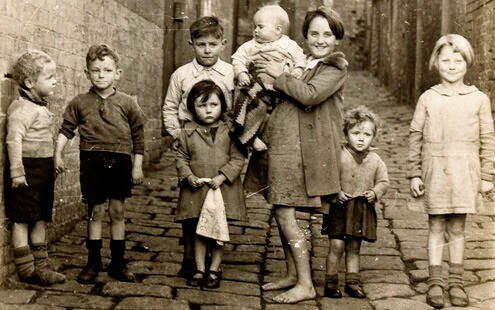
THE LESSONS OF HISTORY - PICTURES OF SLUMS

 |
| SAVE PUBLIC HOUSING |
 |
| HOW QUICKLY WE FORGET THE LESSONS OF HISTORY. |

Pictures of the slums from 'I remember' by Oswald Barnett ( 1883–1972)
******************************************
A friend of Brian Howe AO advised us to make contact with him, to share with him our concerns regarding the loss of public housing via stock transfers and its ramifications, as well as the issue of public tenants' human rights.
http://en.wikipedia.org/wiki/Brian_Howe_(politician)
'Having met Oswald Barnett, the founder of public housing in Victoria,
when I was in my teens I was an early convert on the importance of
public housing as an important tool to combat poverty and inequality
in Australia.'
Brian Howe.
'It is only the Commonwealth government that can reverse the long term trend away from public housing although State governments are important in managing the stock. The reality is that given the inadequate supply of public housing State governments must try to target their limited and ageing stock towards those most in need. Often people without public housing would be homeless. All those who are friends of public housing must campaign for a new deal coming out of the review by the Abbott government of federal state relations. Australia’s national effort on behalf of low income housing has been shameful and cannot be reversed without a commitment to fundamental reform.'
Brian Howe.
'It is only the Commonwealth government that can reverse the long term trend away from public housing although State governments are important in managing the stock. The reality is that given the inadequate supply of public housing State governments must try to target their limited and ageing stock towards those most in need. Often people without public housing would be homeless. All those who are friends of public housing must campaign for a new deal coming out of the review by the Abbott government of federal state relations. Australia’s national effort on behalf of low income housing has been shameful and cannot be reversed without a commitment to fundamental reform.'
Brian Howe.
Sunday, 15 February 2015
LEGAL AID SLAMS NOT-FOR-PROFIT HOUSING GROUPS
Unfair evictions... What is often not talked about is that as a 'community housing' tenant, there can be a 'no cause' eviction clause attached to the lease which means a tenant can be evicted without reason.
WHY aren't transferring public tenants ( and other prospective tenants ) not informed of this by DHS and other service providers / organisations that are supposed to protect the rights of vulnerable people?
I have seen no accurate comprehensive FACT SHEET informing tenants of the differences between 'community/ social housing' and public housing - including the rights that public tenants will lose if they transfer across. This is unacceptable.
Public tenants tell Friends of Public Housing Vic that they are NOT being fully informed before making important decisions that will impact on their housing rights and future housing security.They relinquish their public housing leases without being informed of the serious implications. Many have English as a second language or low literacy skills.
Instead they say they are being actively encouraged and persuaded to enter into community/ social housing leases ... in line with stated housing policy direction.
http://www.probonoaustralia.com.au/news/2015/02/legal-aid-slams-nfp-housing-groups
Claiming charitable status means eligibility for GST concessions. There's nothing charitable about evicting people into homelessness ...
Tuesday, 3 February 2015
HOUSING IS NOT AN OPTIONAL COMMODITY
JD
Hulchanski - Centre for Urban and Community Studies
University of
Toronto
"Housing
is not just another optional commodity. It
is a fundamental necessity for health and well-being, and therefore a
problem that is relevant to public policy. Adequate housing, like
adequate health care, is a recognized human rights obligation.
Households that are unable to generate market demand for a basic
necessity in a society that relies almost exclusively on markets, are
generating social need (or
“non-market demand”). Society can respond to social need only by
changing the institutional arrangements that are responsible for the
failure to meet these social needs. There are many ways to do this,
but relying on so-called trickle-down effects from subsidies to those
who are already well-off are not among them."

Tuesday, 25 November 2014
OUR PRE-ELECTION MESSAGE
FOPHV is an independent grass-roots organisation made up of public tenants and our many supporters who believe that public housing is an essential public asset that should remain in public hands - management and titles.
We will talk to all political parties and encourage individual politicians - and we have met many who privately express unease about this policy direction - to use their influence to try and lobby for the need to save public housing.
If any candidate says something we think is important on this issue we will publish and discuss it. This does not mean we endorse their party. There are powerful interest groups in most of the political parties that want these transfers to go through.
After the election we will continue to work hard to get the politicians to see that the need to save public housing is imperative if we want to make sure that nobody is without shelter in a prosperous country like Australia.
Since housing is not working for many people in this country, we should not only save and increase the amount of public housing, but move away from it being seen as 'welfare housing'. As in other countries in Europe a modest little public housing flat, whose rents are linked to income rather than market forces, and with security of tenure, should be readily available to a far greater number of our citizens than what is presently the case.
Saturday, 15 November 2014
TURKEYS TEND NOT TO VOTE FOR CHRISTMAS
It is an extraordinary throw away line, but it does point to a truth that no-one else is saying ( publicly at least ) and that is that public tenants will lose important rights if they transfer to community housing.
Tony Gilmore's article is not unsympathetic to the plight of public tenants and he has concerns about our rights being protected.
It is interesting that, as an expert in the field of stock transfers, he is expressing doubts about whether it is the magic bullet it is promoted as being. While all the states are 'marching forward to the brave new world of stock transfer', maybe we should pause and discuss such a massive change in housing policy direction while we still can.
Tony Gilmore's article is not unsympathetic to the plight of public tenants and he has concerns about our rights being protected.
It is interesting that, as an expert in the field of stock transfers, he is expressing doubts about whether it is the magic bullet it is promoted as being. While all the states are 'marching forward to the brave new world of stock transfer', maybe we should pause and discuss such a massive change in housing policy direction while we still can.
For a Cook's Tour of the privatisation of public housing, state by state, read more ( it was written mid 2013 )
--------------------------------------
Some excerpts..
'Are we driving change by thinking about what is best for tenants and communities, or what looks best for bean counters?'
'Rearranging the Chairs.
Viewing Australia from outer-space, an inter-galactic housing policy traveller may raise the rather obvious point that stock transfer does not create new social housing. However many times we change the name of the landlord, we do not build any new homes for people in housing need.'
'Queensland Government recently announced that all public housing would be transferred from their management by 2020.'
Dr Tony Gilmore
Some excerpts..
'Are we driving change by thinking about what is best for tenants and communities, or what looks best for bean counters?'
'Rearranging the Chairs.
Viewing Australia from outer-space, an inter-galactic housing policy traveller may raise the rather obvious point that stock transfer does not create new social housing. However many times we change the name of the landlord, we do not build any new homes for people in housing need.'
'Queensland Government recently announced that all public housing would be transferred from their management by 2020.'
Dr Tony Gilmore
------------------------------
Subscribe to:
Posts (Atom)